
Beyond the Tragedy: How Tony Bailey-Raines Preserves Altadena’s Generational Memory
When the media tells Black stories, audiences often hear only of devastation and poverty. Tragedies are showcased, while excellence—even when present—is rarely seen or heard. However, Tony Bailey-Raines shares a story that highlights the excellence that existed long before tragedy struck.
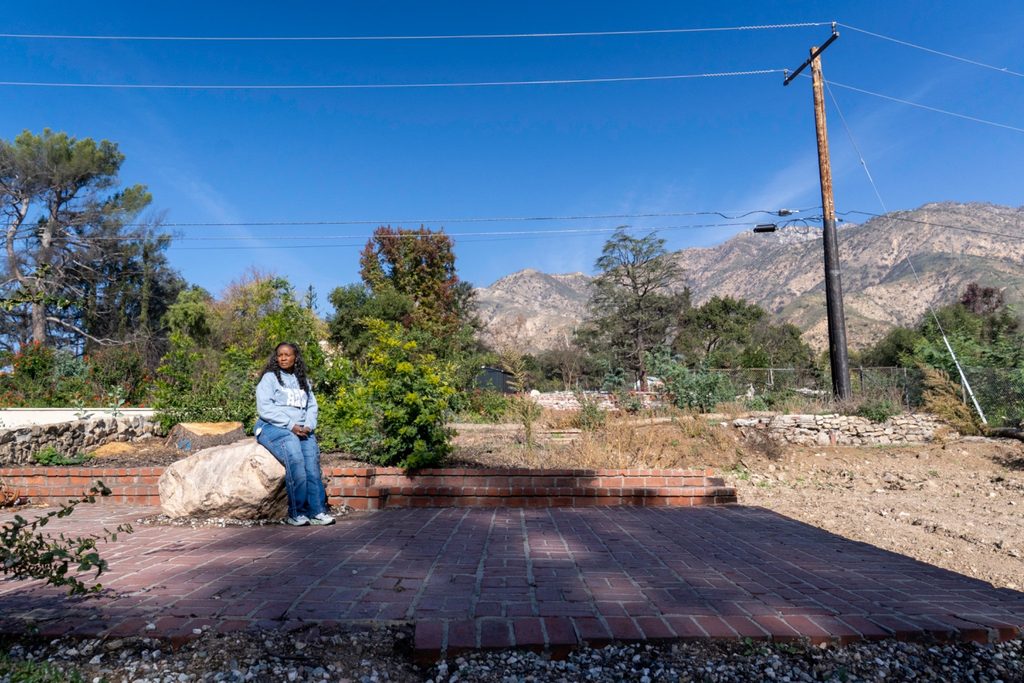
In 2025, Altadena, a historically Black neighborhood near Pasadena, suffered tremendous loss when fires erupted across the Los Angeles region. Many lives, homes, and physical keepsakes were lost. The only things remaining—albeit not physically—are the memories former residents hold of the neighborhood prior to the disaster. Raines, a former resident of Altadena, was directly affected by the fires. Her childhood home was destroyed by the flames, leaving her memories as some of the only things left standing. “Those memories, you don’t ever forget,” Raines said. “Though the physical structure might be gone, we’ll never forget all the memories of being in this house together, growing up.”
Raines’s history with Altadena dates back to 1968, when her parents purchased the house when she was two years old. They bought the property from a Black woman at a time when Altadena was heavily redlined, with Black families largely restricted to buying homes on the east side of the neighborhood.
Raines described her home as welcoming and a true communal hub. Growing up with three siblings while her parents served as scout leaders, she recalled that neighborhood children were always around—whether they were her siblings’ friends or members of the local Girl Scouts and Boy Scouts.
It was the house where friends came for sleepovers and where neighborhood barbecues were hosted. Because her parents were so welcoming, they became pillars in both the community and the lives of their children’s friends. Visiting friends often noticed the stark difference between their own households and the Raines residence, from the food served to the home appliances. To many of her childhood peers, Raines’s family represented the pinnacle of Black affluence. “Kids would come over and they were exposed to a different life because that’s the life that we lived because of my parents,” Raines said.
Aside from her memories, some of the only physical remnants left after the fires are the stumps of pine trees that once stood tall in the front yard. Those trees grew from seedlings that Raines and her late brother, Eric, received for Arbor Day. Although her family lost nearly everything in the fire, Raines said losing the trees would have devastated her most because of their deep connection to her brother. “They didn’t burn in the fire, and I’m super thankful for that because that probably really would’ve broken me,” Raines said. “I don’t have my brother anymore, but I still have the trees.”

Prior to the fires, Raines had insisted that her father place the home into a trust, viewing the property as her parents’ legacy. While Raines wants to rebuild, her mother has been wary of doing so due to the overwhelming cost, estimated at around $1.5 million. The anxiety over the cost initially led her parents to decide against rebuilding.
However, the family is currently working to convince them to rebuild—not only to avoid a jump in property taxes, but also to preserve her parents’ legacy. Raines emphasizes the importance of protecting this legacy by fostering generational wealth, especially given the systemic barriers designed to prevent Black families from building wealth.
By sharing her story, Raines demonstrates how oral history serves to preserve the vibrant memory of Altadena as former residents knew it. Her childhood memories form a vital part of the legacy she seeks to protect—a story of Black excellence during an era when systemic barriers sought to limit it.