
Lonnie Bunch and the Battle for American History
Lonnie Bunch helped give Black history a permanent home on the National Mall. As he prepares to step down from the Smithsonian Institution, the work he spent decades building faces growing political pressure over whose experiences belong in the nation’s public memory.
Bunch announced on Sept. 8 that he would retire by the end of 2026, concluding nearly 38 years of service at the Smithsonian. He became its first Black secretary in 2019. Although his departure follows repeated attacks from the Trump administration, Bunch has said that White House pressure did not determine his decision to leave, according to Reuters.
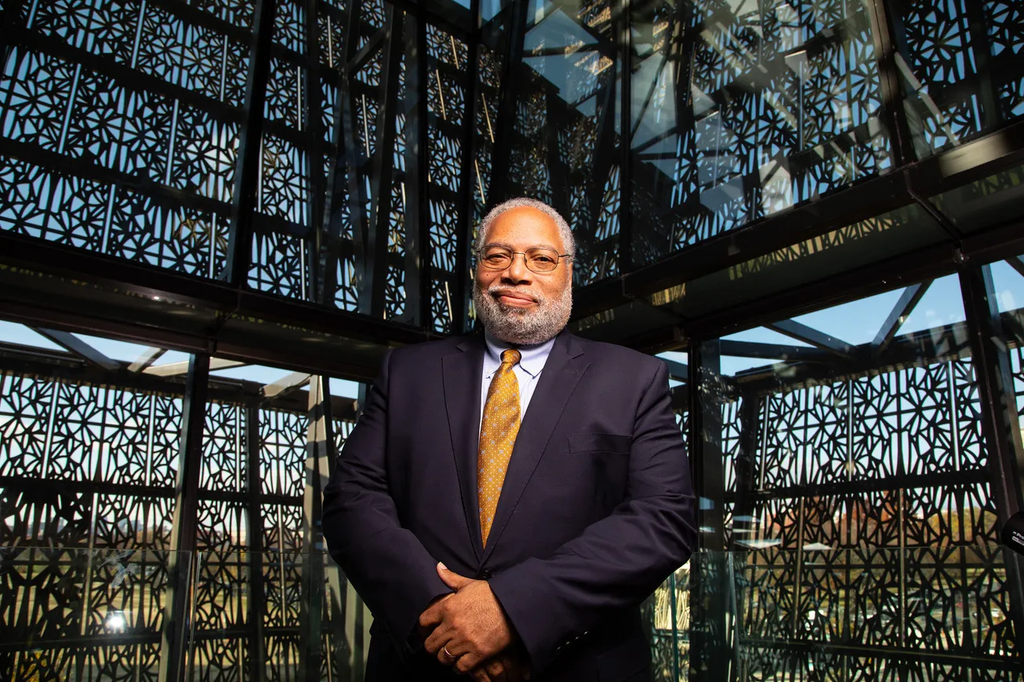
His most visible contribution began in 2005, when he became the founding director of the National Museum of African American History and Culture. The project had no building, no collection, and just one staff member. Bunch worked with colleagues, donors, and Congress to bring it to life. When the museum opened on Sept. 24, 2016, Black history gained a dedicated national space steps from the Washington Monument.
The objects Bunch and his curatorial team collected made that history tangible. Harriet Tubman’s shawl, Emmett Till’s original casket, and Louis Armstrong’s trumpet place the struggle for freedom, racial violence, and cultural achievement within the same national story. By the end of his directorship, the museum’s permanent collection included nearly 40,000 objects, according to the museum.
That approach gives visitors a fuller understanding of the country. The museum asks them to see how Black Americans’ struggles and achievements shaped national life, with the objects themselves providing evidence of that history.
As secretary, Bunch carried that work across a much larger institution. He advanced plans for the Smithsonian American Women’s History Museum and the National Museum of the American Latino. The Atlantic’s assessment of his tenure also credits his ability to keep the Smithsonian focused on its mission through the pandemic, racial justice debates, and political confrontation.
That leadership has faced increasingly direct challenges. In a July 24 executive order, President Donald Trump accused Smithsonian leaders of failing to present American history honestly. The order directed federal officials to use available authority to press for changes and install warning signs near the National Museum of American History. It framed the intervention as restoring public trust.
The consequences extend beyond the Smithsonian. In July, the National Park Service replaced panels about slavery at the President’s House site in Philadelphia. Advocates argued that the new language minimized slavery’s brutality and George Washington’s responsibility. The Interior Department maintained that the replacements acknowledged slavery’s injustices and told a fuller story, ABC News reported.
These disputes show how historical understanding can change even when a site remains open. The language surrounding an artifact shapes what visitors learn from it. Removing context about oppression can leave people with an incomplete understanding of the individuals and institutions being commemorated.
Accuracy also requires distinguishing political intervention from routine museum work. The Smithsonian said in April 2025 that reports claiming it had removed the Greensboro lunch counter and related stools were false. It also explained that returning loaned objects and rotating displays are standard preservation practices.

Bunch addressed the larger debate during the African American museum’s 10th anniversary celebration on Sept. 25. Rejecting claims that the Smithsonian’s work was unpatriotic, he defended historical honesty as an expression of commitment to the country. “And what you see in this building is great love. Great respect,” he said, according to The Guardian.
His departure leaves the Smithsonian with the responsibility to protect the collections he helped build and the scholarship that gives them meaning. Preserving Bunch’s legacy means keeping those histories accessible, including the parts that challenge how Americans understand their country. The people represented in those galleries deserve to remain visible after the leadership changes.