
The Second Draft Project: Bridging the Gap between Headlines and Humans
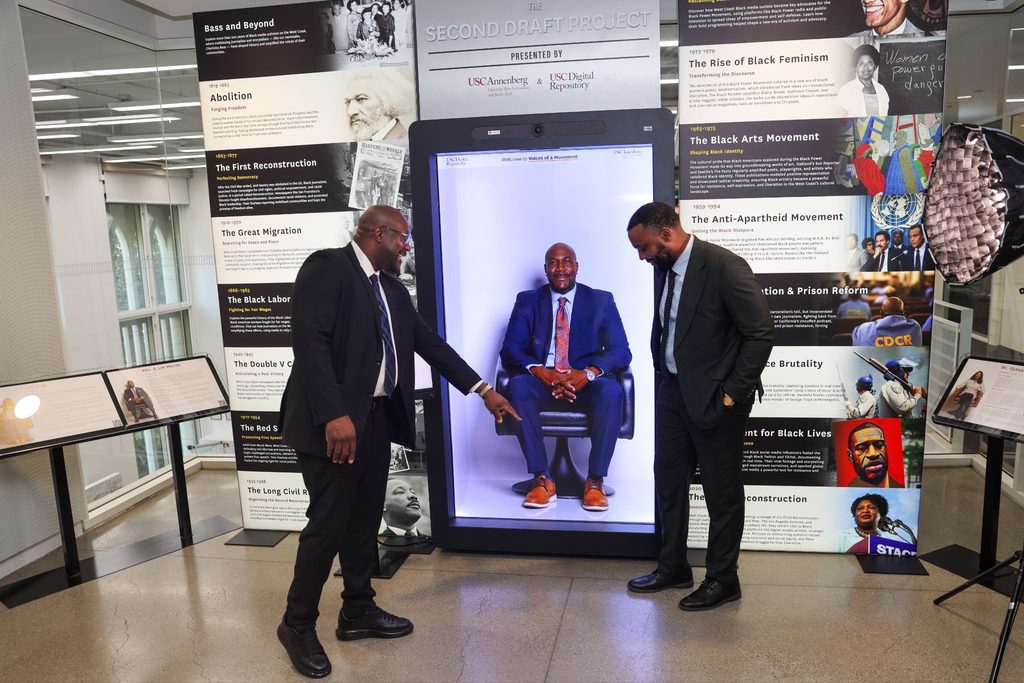
On the second floor of USC’s Annenberg School for Journalism sit four conversations the news cycle never made room for: Ilyasah Shabazz, the daughter of Malcom X; Lora King, the daughter of Rodney King; Lee Merrit, a civil rights attorney who has spent his career fighting for accountability; and Philonese Floyd, the brother of George Floyd. Together, the Second Draft Project gives them a chance to describe the same wound: having their stories distorted by coverage that rewards speed over accuracy and reduces grief and advocacy down to a headline. It gives them a chance to be listened to, and to see accountability become real instead of performative. The project exists to make that possible, offering a different vision for how AI can engage with personal stories.
The Second Draft Project is an initiative championed by Dr. Alissa Richardson and the Charlotta Bass Lab, built to revisit public stories from a non-traditional angle. It seeks direct input from the people who were directly affected or involved, rather than whatever will attract the most attention.
Mike Jones works with USC Libraries’ Interactive Interviews Service, which created a partnership with the Bass Lab and has since then created four interactive interviews as part of the Second Draft Project. Jones is directly involved in the technological development of the project, leading the team that built and maintains its web application and the custom machine-learning models that power each conversation.
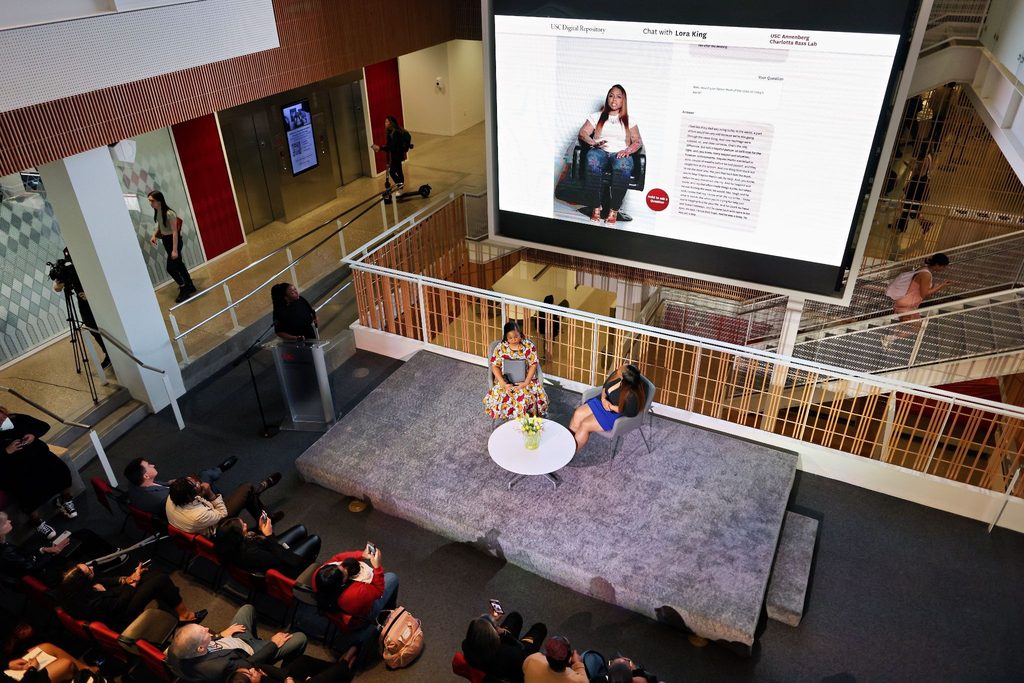
When a visitor asks a question, a speech-to-text model transcribes it, then a conversation model matches it to the answers originally recorded in the interview. The conversation model compares the visitor’s question to the questions and answers from the interview. If the system determines there is a good match, it plays the corresponding video. If none of the answers is a close enough match, it plays a prerecorded fallback response instead of forcing an answer.
The team could have generated new answers in an interview subject’s voice, but chose not to. Jones said the concern was factual accuracy: when dealing with real people, their stories, and sensitive subject matter, the system should not provide answers that get the facts wrong. An answer did not have to be a perfect fit for the question to be useful. When the system could not provide a factually reliable response, it instead uses one of several prerecorded responses. Some are straightforward; others are deliberately lighthearted, like one that simply says “That’s a good question for a historian.”
Consent here starts long before a camera turns on, with at least one Zoom call where participants can ask questions and learn how the technology works. Once filming begins, the message stays the same. “Your personal well-being is the first and foremost priority here,” Jones said. Participants choose which questions to answer and how, and are never pushed to answer anything they would rather not.
Asked what the project is ultimately trying to preserve, a person’s words, their personality, or simply the feeling of speaking with them, Jones didn’t pick one. “Hearing their voice in their own words, seeing what they look like, and capturing their personality, hearing their stories, that’s all a collective approach to what the preservation goal is,” he said. Some interviewees have sung for the camera; one, Lee Merritt, recited poetry. Moments like that, Jones said, are what keep the project from reducing anyone to a headline. “They’re not just a name in a news article or trending on social media.”
Jones traces the moment he knew the project mattered to the first time the team filmed Lora King. “Internally in the room, we all knew we had something very special,” he said. That feeling was confirmed months later, when the interview debuted on Bass Lab Day and he watched visitors, students, and collaborators sit down and ask the project its first real questions.
What he hopes other universities and media organizations take from it is simple: that everyone has a story worth capturing before the change is gone. “Taking the steps to ensure that those human stories are captured, preserved, and shared, is really what we hope for in all of this,” he said.